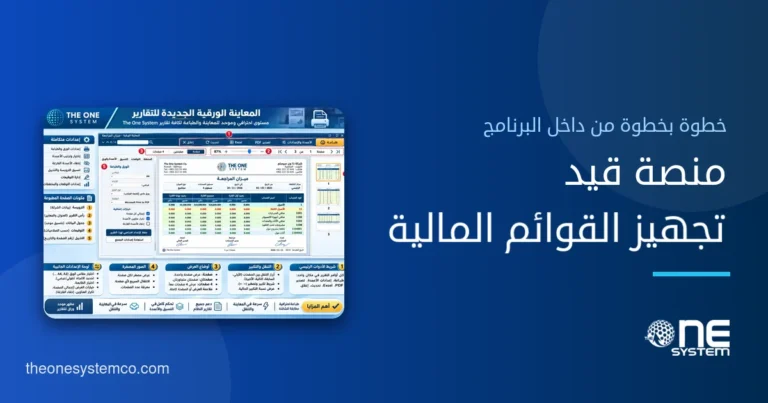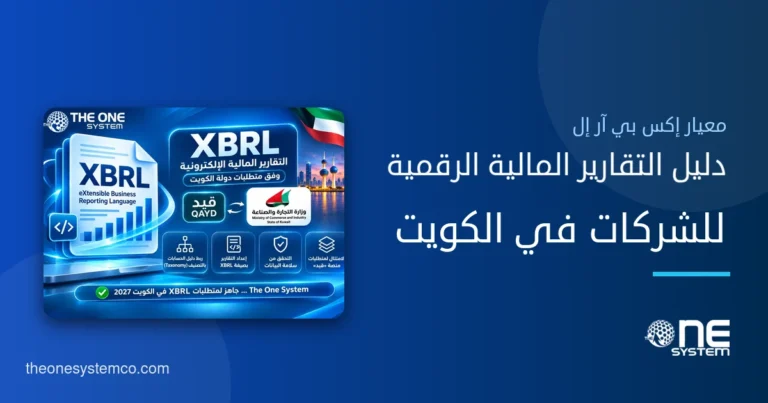
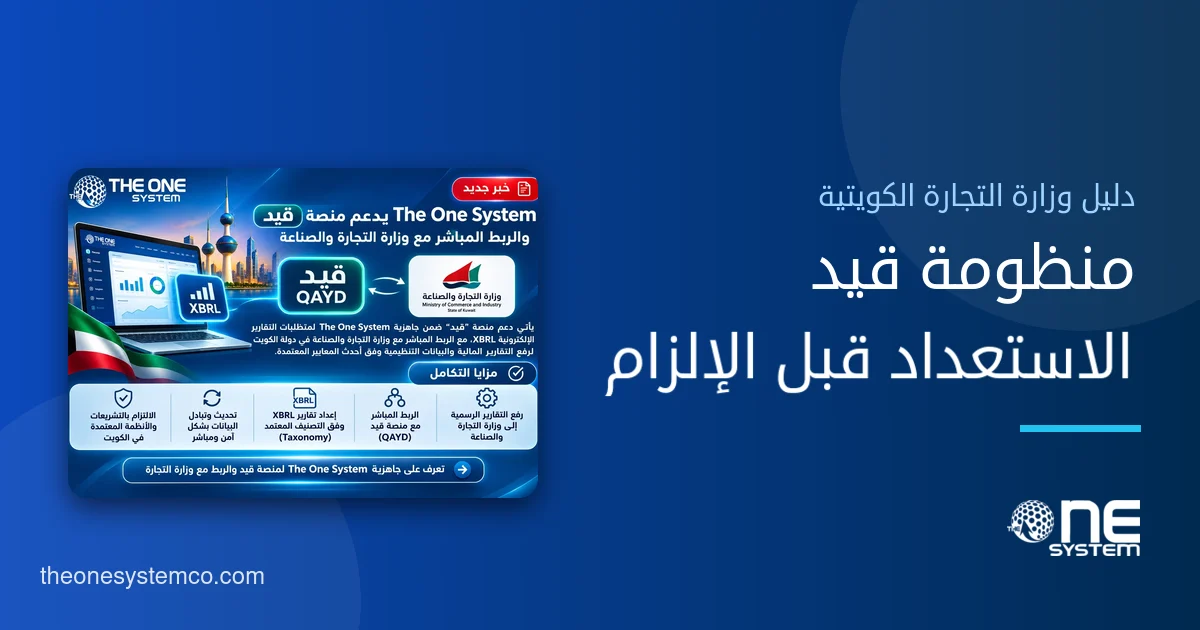
The Qayd platform is a digital system launched by Kuwait’s Ministry of Commerce and Industry so that companies can file their financial statements electronically in XBRL format, replacing paper and PDF submissions. According to the ministry, filing through Qayd remains optional throughout 2026 and becomes an obligation for companies from the beginning of 2027. This guide covers what the Qayd platform is, what changes for companies, and how to get your business ready from within your accounting software before the mandatory date arrives.
What is the Qayd platform?
Qayd (QAYD) is an online platform run by the Ministry of Commerce and Industry, through which the ministry collects companies’ financial statements as structured digital data. The underlying idea is simple: financial statements are no longer just documents for people to read, but data that systems can read, analyse and compare automatically.
To make this possible, the Ministry of Commerce’s Qayd platform relies on XBRL, an international language for expressing financial information. In XBRL, every figure in the statements is tied to a defined element with a clear meaning, such as “Total revenue” or “Cash and cash equivalents”. Correct numbers alone are therefore not enough: each one also has to be classified and linked to the right element.
Why did the Ministry of Commerce launch Qayd?
Qayd is part of Kuwait’s wider push to digitise government services and the handling of financial data. Its main outcomes include:
- A single, consistent way for all companies to submit financial statements
- Fewer errors caused by manual entry and retyping
- Faster review of financial data by the competent authorities
- The ability to analyse and compare data across companies and sectors
- A gradual move away from paper documents
- Better quality and transparency in financial disclosure
When does filing through Qayd become mandatory?
The ministry has announced that Qayd will be rolled out in two phases:
- Optional phase: during 2026Companies may file through the platform on a voluntary basis. This is the ideal window to prepare the chart of accounts and trial the new statement format without the pressure of a deadline.
- Mandatory phase: from the start of 2027Filing through Qayd becomes compulsory, as announced by the ministry. Any company that has not prepared in advance may find itself under pressure to get its data in order.
We recommend following the official announcements of the Ministry of Commerce and Industry on its website, moci.gov.kw, to confirm final deadlines, which companies are covered and the procedural details, as these may be updated.
What changes in preparing financial statements?
Traditionally, the accountant built the balance sheet and income statement in a file, then printed it or saved it as a PDF and submitted it. With Qayd, the financial statements must come out of the accounting system as structured data linked to the approved classifications. That shifts the way work is done in three key areas:
Chart of accounts
The chart of accounts must be organised and classified so that every account can be linked to the appropriate element in the approved taxonomy.
Taxonomy linking
Each account or group of accounts is linked to a specific XBRL element, a step known as taxonomy mapping.
Data accuracy
Any misclassification or missing data surfaces during conversion, which makes a review before upload essential.
Traditional filing vs. filing through Qayd
The table below sets out the main differences between the two approaches from the point of view of the accountant and company management:
| Aspect | Traditional filing | Filing through Qayd |
|---|---|---|
| Statement format | Paper file or PDF | Structured data in XBRL format |
| How it is read | By people only | Machine-readable, with automatic analysis |
| Chart of accounts | No need to link it to a unified taxonomy | Accounts must be linked to the approved taxonomy |
| Detecting errors | Usually after submission | During conversion, before upload |
| Re-entering data | Common between the software and separate files | Data flows straight out of the system |
| Year-on-year comparison | Manual | Easier thanks to standard elements |
In practice, this means the quality of a company’s financial statements now depends on how well its accounting software is organised throughout the year, not only on the accountant’s work at year end.
Key terms to know before working with Qayd
You will come across these terms often while preparing, and understanding them makes communication between the accountant and the support team much smoother:
XBRL
A standard language for representing financial data electronically, in which each figure is identified by an element with a precise meaning.
Taxonomy
The approved dictionary that sets out which financial elements may be used, how each is defined and how they relate to one another.
Mapping
The process of linking a company’s internal accounts to the elements of the approved taxonomy.
Report file (Instance)
The final file containing the financial values attached to their elements; this is the file uploaded to the platform.
Context
Identifies the entity and the period each figure relates to, such as the current financial year or the comparative year.
Unit
Specifies the type of value, such as Kuwaiti dinars or number of shares.
How does Qayd relate to the XBRL standard?
XBRL stands for eXtensible Business Reporting Language, and it is the standard Qayd uses to receive data. Think of it as a shared language between the company and the regulator: inside its own system, a company can name its accounts however it likes, but at filing time each account has to be “translated” into its counterpart element in the approved taxonomy.
Example: a company may have an account called “Branch sales”, while the taxonomy expects an element named revenue. This is where the mapping layer comes in:
For a closer look at the standard itself, see our guide: What is XBRL and how does it connect to the chart of accounts?
Steps to prepare for Qayd inside your accounting system
Proper preparation starts inside the accounting software, not a few days before upload. Here are the practical steps, in order:
- Review the company’s core detailsMake sure the entity’s information is complete and current, including the trade name, registration number, business activity and financial year.
- Review the chart of accountsClear out unused accounts, merge duplicates and confirm that every account sits at the right level and in the right classification.
- Map accounts to the taxonomyLink each account or group of accounts to the appropriate element in the approved taxonomy.
- Produce the statements from within the systemGenerate the balance sheet, income statement and other required statements directly from recorded data, with no manual re-entry.
- Review before uploadCheck balances, classifications and any missing data, and resolve discrepancies before filing.
- Convert and uploadConvert the data into the required electronic structure, then upload it in line with the ministry’s approved procedures.
Manual mapping or mapping inside the software?
A company has two ways to get its data ready for Qayd. The first is to export the financial statements from the software into external files and then rearrange and map them to the taxonomy by hand, year after year. This can seem quicker at first, but it depends on repeated individual effort, raises the risk of errors when figures are transferred, and makes it hard to trace the cause of any discrepancy later on.
The second is to do the mapping once, inside the accounting software itself: each account is linked to its taxonomy element, and the statements for every period are then produced directly from recorded data. The advantage is that mapping becomes part of the system. A new account is mapped as soon as it is created, the statements stay consistent from one year to the next, and any accountant on the team can pick up the work without depending on one particular person.
For this reason, we advise companies to make Qayd readiness part of how their accounting software is set up, rather than a separate task left until year end.
Does Qayd affect small and medium-sized companies?
Many small and medium-sized companies rely on a single accountant or an external accounting firm, and their chart of accounts may be basic or not fully organised. These are precisely the businesses that gain most from starting early: organising accounts takes time, and accounting firms will be under growing pressure as the mandatory date approaches.
The upside is that the structure Qayd demands also benefits the company itself, with clearer accounts, more accurate internal reports and a better grip on profits, expenses and decision-making. Qayd can therefore be seen as an opportunity to raise the standard of financial management, not merely a regulatory requirement.
The role of the accountant and the audit firm during the transition
The in-house accountant is closest to the company’s data. Their main responsibilities are organising the chart of accounts, keeping daily journal entries accurate and making sure every account is mapped to the correct element. The audit firm, for its part, reviews the financial statements and verifies balances and disclosures before they are approved.
Well-organised accounting software makes collaboration between the two far easier. Instead of passing multiple files back and forth and rearranging figures, everyone works from the same data in one place, so reviewing the mapping and the statements becomes quicker and more accurate.
A suggested preparation plan for 2026
Since 2026 is the optional period, preparation can be split into phases that fit around the company’s workload:
- Phase 1: AssessmentList the accounts actually in use, identify duplicate or unclassified accounts, and decide who inside the company owns the Qayd file.
- Phase 2: OrganisationRestructure the chart of accounts where needed, complete the company’s details, and settle old balances and pending entries.
- Phase 3: MappingLink accounts to the elements of the approved taxonomy and document each mapping decision so that it does not rest with one person.
- Phase 4: Trial runPrepare the financial year’s statements from within the system, test the conversion, then review and fix any discrepancies.
- Phase 5: ReadinessLock in the procedures, train the team and get ready for mandatory filing at the start of 2027.
Companies that start early turn Qayd from a year-end burden into a chance to put their accounts in order and improve the quality of their internal reporting too.
Illustrative example: a trading company prepares for Qayd
The following example is hypothetical, intended only to illustrate the idea, and does not represent a real client:
A trading company in Kuwait has two branches and a chart of accounts that has grown over the years. It contains overlapping accounts such as “Cash sales”, “Branch 1 sales” and “Sales revenue”, and some expenses are booked to a catch-all account called “Miscellaneous expenses”.
In the first phase, the accountant lists the accounts actually used during the year and finds that roughly a quarter of them are either unused or duplicated. In the second phase, the similar sales accounts are merged into a single group, with branch-level detail kept through cost centres, and “Miscellaneous expenses” is split into clear accounts such as rent, electricity and salaries.
In the third phase, each group of accounts is mapped to its element in the approved taxonomy: the sales group to revenue, cash and bank accounts to cash and cash equivalents, and so on. The accountant then produces the year’s statements from the software and runs a test conversion, which reveals an account carrying a balance that has not yet been mapped. It is fixed before upload.
As a result, the company enters the mandatory phase in 2027 with an organised chart of accounts and documented mapping. It can prepare its statements each year from recorded data without redoing work, and management gains clearer internal reports for tracking the performance of each branch.
Quick checklist before uploading financial statements
Before you press the upload button, confirm the following:
- The trial balance balances and there are no suspense accounts
- Every account with a balance is mapped to a taxonomy element
- Company and financial-year details are correct and complete
- Prior-year comparative figures match the approved statements
- Currency and units are set correctly
- The statements have been reviewed by a second person or the audit firm
Questions to ask your accounting software provider
If you are assessing your current software or looking for a new one, these questions show how ready it is for Qayd:
- Can the software map the chart of accounts to the approved taxonomy?
- Are the financial statements generated directly from recorded data?
- Does the software let you review the data before conversion?
- Does the provider track ministry updates and develop the system accordingly?
- Is technical support and team training available in Kuwait?
Common mistakes to avoid before upload
- Putting off preparation until the mandatory date is close
- A disorganised chart of accounts or one full of duplicates
- Mapping an account to an unsuitable taxonomy element
- Building the statements in external files instead of generating them from the system
- Not reviewing opening balances and pending entries
- Relying on one person who understands the mapping, with nothing documented
How The One System prepares your company for Qayd
The One System is preparing its accounting platform to support the requirements of Qayd and XBRL, so that readiness happens within the system itself:
XBRL-compliant reports
Preparing financial reports that meet XBRL requirements, built from the data recorded in the software.
Chart of accounts mapping
A way to link the company’s accounts to the elements of the approved taxonomy while keeping the internal chart of accounts.
Structured data
Keeping company details and financial information organised and complete.
Pre-upload review
Helping users check the required data and spot gaps before filing.
Multi-level chart of accounts
A flexible chart of accounts, journal entries, trial balance and financial statements in one system.
Support and training
One year of free technical support plus staff training to help your team through the transition.
Most importantly, the company does not need to overhaul the way it works. The data the accountant records in the software every day is the same data later used to prepare statements in XBRL format. Learn more about our accounting software for companies or read our guide to accounting software in Kuwait.
Who benefits from preparing early?
Accountants and finance managers
To organise the chart of accounts and trial the new statement format before it becomes mandatory.
Business owners
To avoid last-minute pressure and any comments on the financial statements.
Accounting firms
To prepare their clients in an organised, consistent way.
Frequently asked questions about Qayd
Short, clear answers to the questions our clients ask us most.
01What is the Qayd platform?
Qayd, run by Kuwait’s Ministry of Commerce and Industry, receives companies’ financial statements as structured digital data based on the XBRL standard, replacing paper filing.
02When does filing through Qayd become mandatory?
The ministry has set 2026 as a period in which filing is optional, with the obligation starting on 1 January 2027. We recommend following the ministry’s official announcements to confirm the details.
03What is the difference between “Qayd system” and “Qayd platform”?
Both names refer to the same online platform operated by the Ministry of Commerce and Industry for submitting financial statements.
04How does Qayd relate to the XBRL standard?
The platform is built on XBRL, a standard language for representing financial data electronically in a structured form that systems can read and process.
05Do I need to change my entire chart of accounts?
Not necessarily. You can keep your internal chart of accounts and add a mapping layer between your accounts and the approved taxonomies, while tidying up any disorganised accounts.
06Does The One System help with preparing for Qayd?
Yes. The One System is preparing its accounting system to map the chart of accounts to the approved taxonomies and to produce XBRL-compliant financial reports, backed by technical support and staff training.
Didn’t find your answer? Our team is happy to help.
Related articles and news
News: The One System and Qayd — The One System and XBRL — What is XBRL? — Accounting software in Kuwait.